

Pasture-raised poultry
Naysmith Farm
Fresh eggs, seasonal chicks, and small-batch poultry products raised with care.
Farm Fresh Products & Birds Bred to Standard
Browse available products, from farm-fresh eggs from pasture raised birds to bred-to-standard bantams.
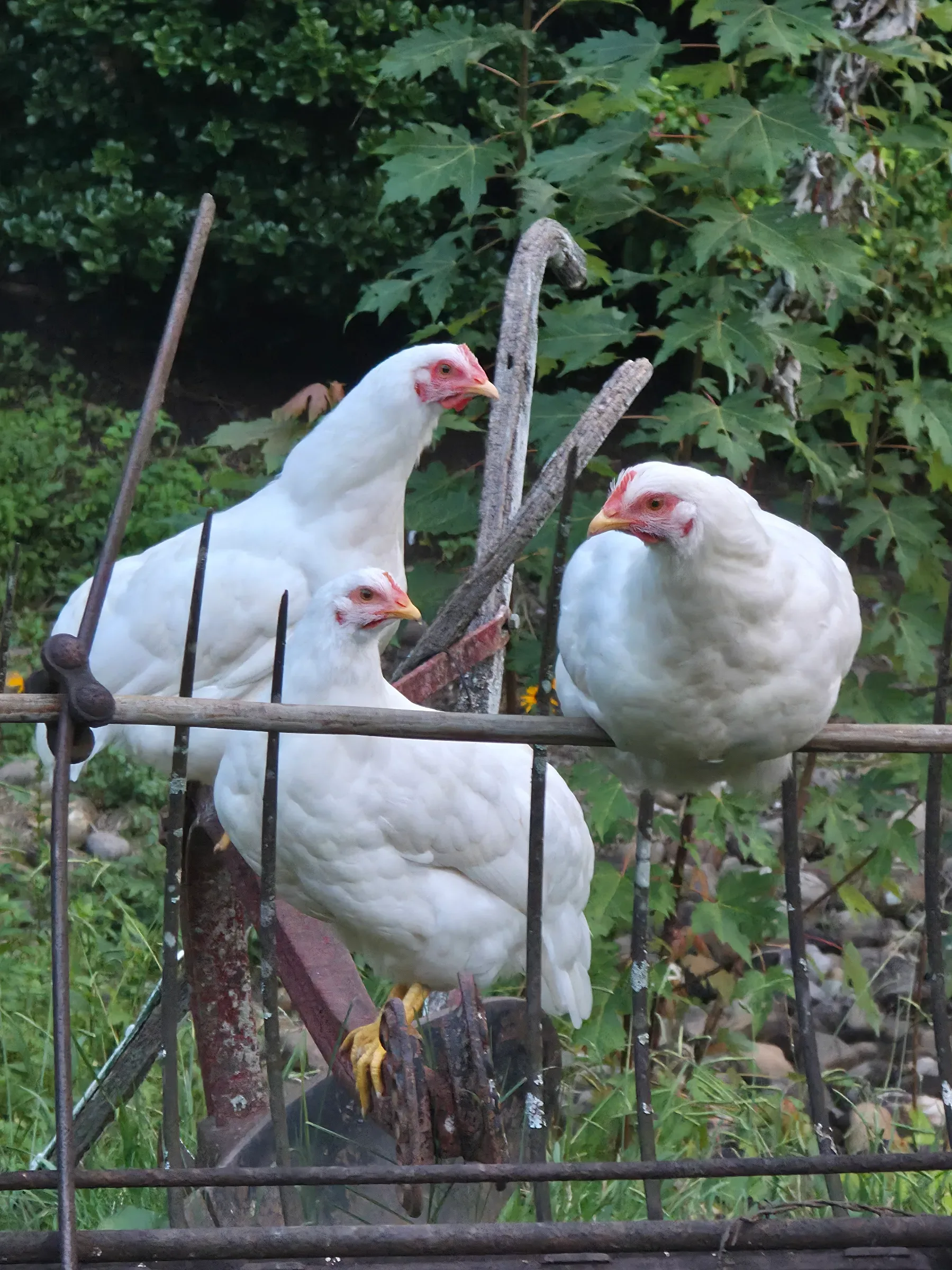
White Rock Hatching Eggs
In stockThe American homestead chicken. Big, calm, and it lays. If you want one breed that just works, this is it. The White Plymouth Rock, "White Rock" for short, is a large-fowl American breed that has been the backbone of small farms in this country since the 1800s. Barred Rocks entered the first Standard of Perfection in 1874; the White variety followed, and is generally dated to 1888, out of white sports that appeared in Maine in the 1870s. Everything about the bird is practical. Clean yellow legs, yellow skin, a five-point single comb, and a broad, deep body that makes both a good layer and a real carcass. What you get Large fowl, not bantam: hens ~7.5 lb, roosters ~9.5 lb 200 or more large brown eggs a year Laying usually starts around 18 to 22 weeks Cold-hardy, feathers out fast as a chick Calm, friendly, not flighty, and a genuinely good forager That last one matters more than people expect. A Rock will spend the day working a pasture instead of pacing a fence, and it won't be over your garden fence the way a Leghorn or a Sebright will. From our breeding flocks here at Naysmith Farm The Plymouth Rock has such deep roots in American poultry that the White Rock sits in the ancestry of the commercial broiler: the classic meat cross was built from a Cornish male over a large-boned White Plymouth Rock female. Today's commercial broilers come from proprietary lines bred apart for decades toward extreme growth. These are the farm breed that industry started from, not the industrial bird. They grow at a normal pace and they live a normal life. The breed did well enough in the hands of small farms that the Livestock Conservancy graduated the Plymouth Rock off its priority list entirely in 2023. Honest care notes The single comb is the one weak point in a hard freeze. Big combs are the first thing to take frostbite, and damp, poorly ventilated housing is what causes it, more than the temperature outside. Ventilation without a draft is the fix. On broodiness: some Rock hens will set and make excellent mothers, and some won't touch a nest. It's strain-dependent, and anyone promising you a reliably broody Rock is overselling. If hatching your own is the goal, that's what our Silkies are for.
$35.00 / dozen
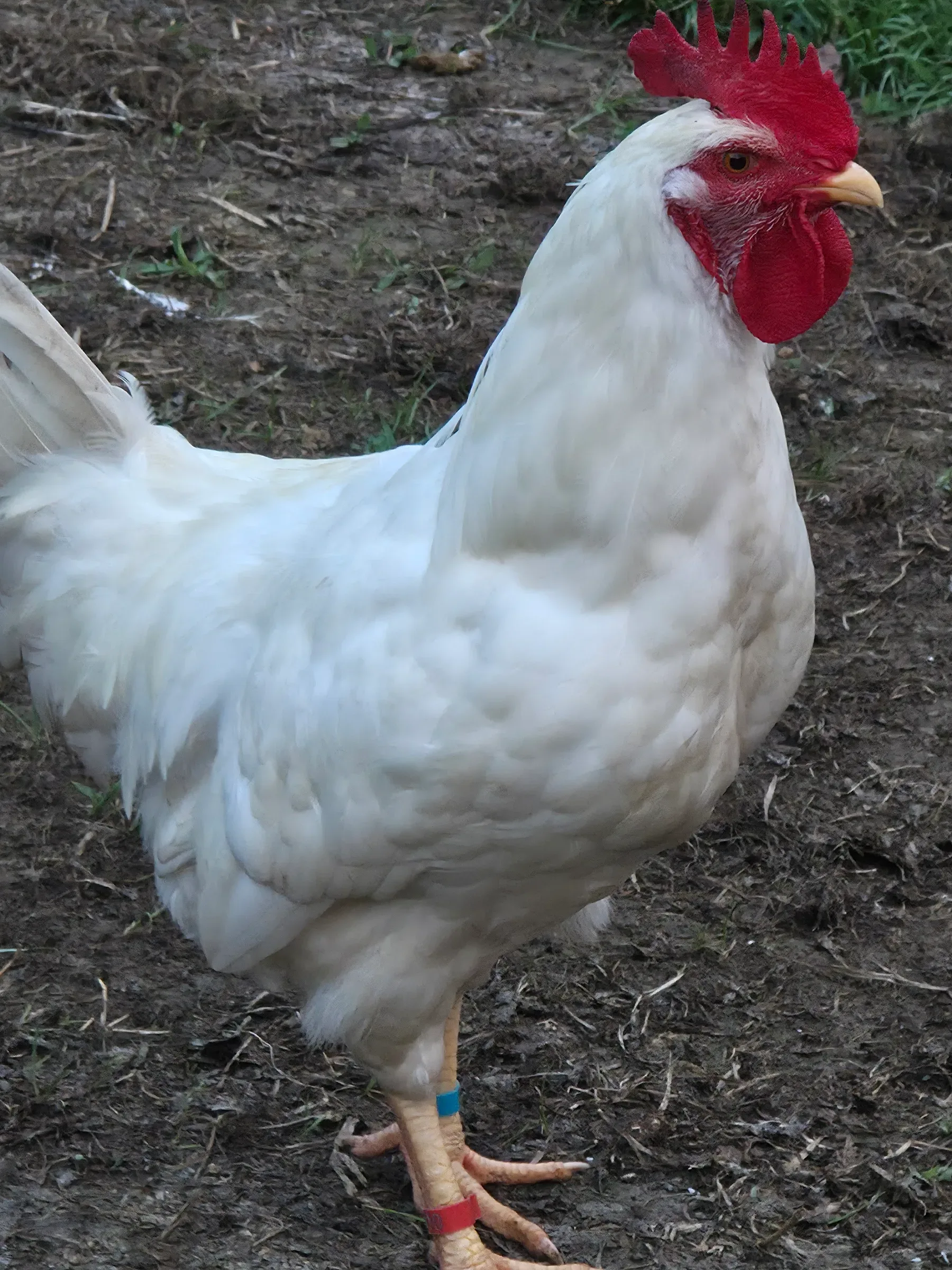
White Plymouth Rocks
Next hatch Oct 19The American homestead chicken. Big, calm, and it lays. If you want one breed that just works, this is it. The White Plymouth Rock, "White Rock" for short, is a large-fowl American breed that has been the backbone of small farms in this country since the 1800s. Barred Rocks entered the first Standard of Perfection in 1874; the White variety followed, and is generally dated to 1888, out of white sports that appeared in Maine in the 1870s. Everything about the bird is practical. Clean yellow legs, yellow skin, a five-point single comb, and a broad, deep body that makes both a good layer and a real carcass. What you get Large fowl, not bantam: hens ~7.5 lb, roosters ~9.5 lb 200 or more large brown eggs a year Laying usually starts around 18 to 22 weeks Cold-hardy, feathers out fast as a chick Calm, friendly, not flighty, and a genuinely good forager That last one matters more than people expect. A Rock will spend the day working a pasture instead of pacing a fence, and it won't be over your garden fence the way a Leghorn or a Sebright will. From our breeding flocks here at Naysmith Farm The Plymouth Rock has such deep roots in American poultry that the White Rock sits in the ancestry of the commercial broiler: the classic meat cross was built from a Cornish male over a large-boned White Plymouth Rock female. Today's commercial broilers come from proprietary lines bred apart for decades toward extreme growth. These are the farm breed that industry started from, not the industrial bird. They grow at a normal pace and they live a normal life. The breed did well enough in the hands of small farms that the Livestock Conservancy graduated the Plymouth Rock off its priority list entirely in 2023. Honest care notes The single comb is the one weak point in a hard freeze. Big combs are the first thing to take frostbite, and damp, poorly ventilated housing is what causes it, more than the temperature outside. Ventilation without a draft is the fix. On broodiness: some Rock hens will set and make excellent mothers, and some won't touch a nest. It's strain-dependent, and anyone promising you a reliably broody Rock is overselling. If hatching your own is the goal, that's what our Silkies are for.
from $20.00
Black Silkies
Next hatch May 17Day-old chicks from our Black Silkie flocks.
from $15.00
Mille Fleur's
Next hatch Dec 28Day-old chicks from our Mille Fleur D'Uccle flocks.
from $15.00
Blue Silkies
Next hatch May 17Day-old chicks from our Blue Silkie flocks.
from $15.00
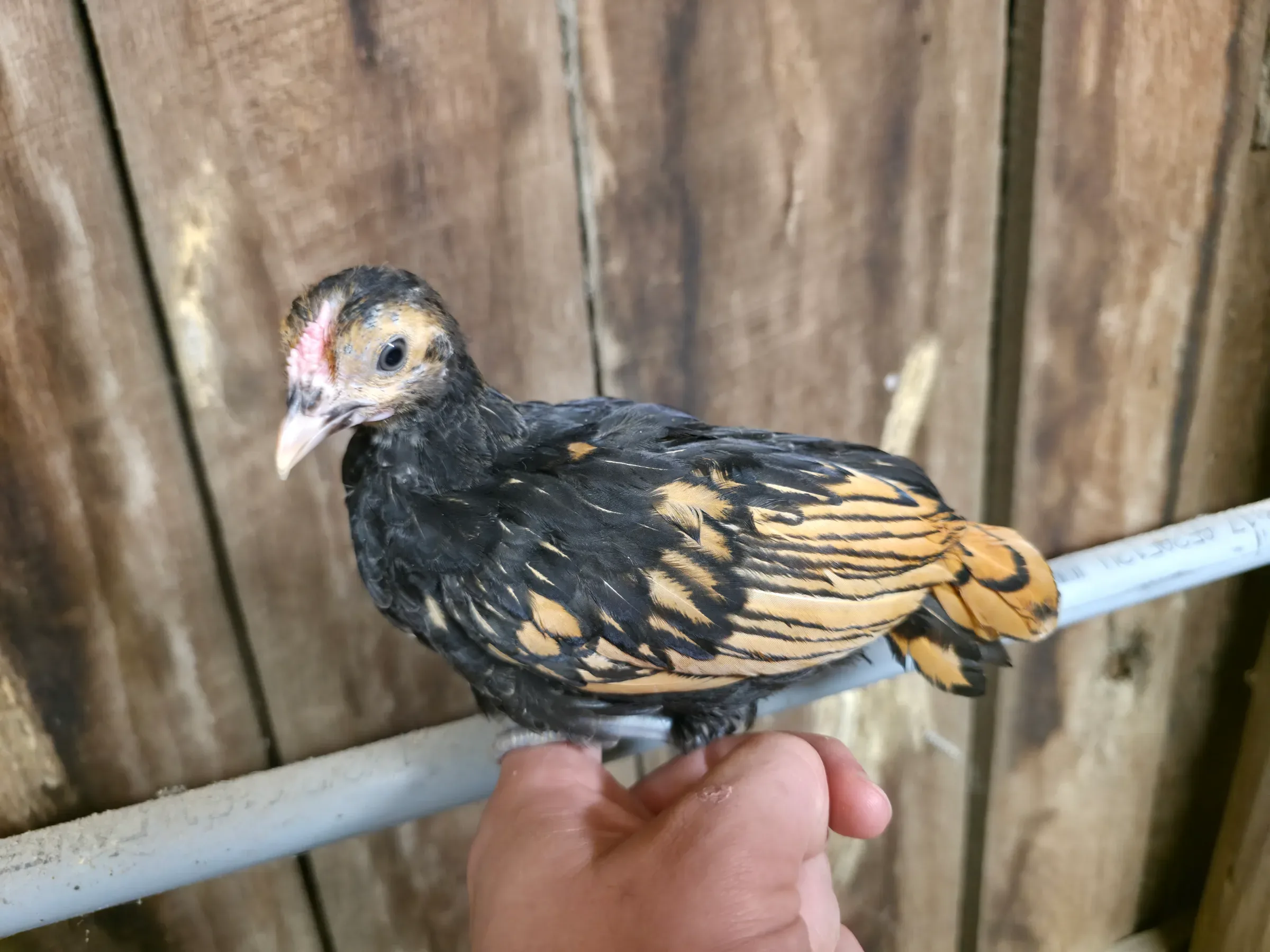
Golden Sebrights
Next hatch Dec 28A true bantam, laced in black, with no full-size version anywhere. The Sebright is one of the few chickens that was bred purely to be beautiful. Sir John Saunders Sebright spent something like two decades in early-1800s England chasing one thing: a tiny bird where every single feather is edged in a crisp black outline. He got it. The breed was in the very first American Standard of Perfection in 1874 and has never had a large-fowl counterpart, a Sebright is a bantam and only a bantam. Golden Sebrights carry that lacing on a warm gold ground, over a tight, almond-shaped feather. Rose comb with a small spike at the back. The strangest thing about a Sebright rooster He doesn't look like a rooster. Sebright males are hen-feathered — no pointed hackle feathers on the neck, no long saddle feathers, no curved sickles in the tail. It's a real genetic quirk of the breed, caused by extra aromatase activity in the feather follicles, and it means the only way you'll pick out a Sebright cockerel from across the yard is by his comb and his attitude. From our breeder flocks here at Naysmith Farm Our Golden Sebright chicks come from two dedicated breeder flocks — three hens to a rooster. True bantam: hens ~20 oz, roosters ~22 oz Every feather laced in black on gold Rose comb; the classic show ideal is a dark mulberry earlobe and face, though modern birds are often bright red Strong fliers, unlike most of what we sell Read this part before you order Sebrights are hard. This is the one breed on our farm where we'd rather talk you out of it than have it go badly. Fertility and hatch rates run low. It's a documented, long-standing problem in the breed, not a strain-specific fluke, and some cockerels are simply born infertile. Chick mortality is higher than average. They need a warmer, drier, cleaner brooder than a hardy standard-size chick would. The hens rarely go broody, so if you want to raise more, you'll want an incubator or a Silkie hen to sit for you. They fly well and they don't want to be caught. An open-topped run will not hold them. Marek's is a real concern in the breed, & worth talking to your vet about vaccination. They're on the Livestock Conservancy's Watch list, and the reason there aren't more of them is everything above. If you're up for it, they're one of the most striking birds you can own.
from $15.00

Our story
Army Veteran-Owned. Family-Run.
I'm a veteran and a lawyer by trade. A few years ago, my wife and I decided we were going to start living the life we wanted our children to grow up living: a good work ethic, strong values, and an appreciation for the world we live in. My wife has worked on farms for much of her adult life, so we made it a mission to get our own. Now, It's turned into a full-blown passion. From our comprehensive breeding program to broilers and pasture raised eggs, we put quality and values into everything we do.
100%
Hatched and raised on our small Tazewell farm
Your Qustions: Answered
Answer common questions before customers reach out.
Are Your Eggs Higher Quality? +
Our eggs come from free-range, pasture raised chickens with optional locally-sourced feed. They're giving plenty of roaming space, a clean place to sleep and regular care and treatment. I can't speak for what others do, but that's pretty hard to beat.
How do I order?+
Simply go to our store page and order from the products available. Depending on the product, you can pick local pick-up, local delivery, or USPS shipping.
Where are you located?+
We're a small farm located in Tazewell, TN. While we don't have an official storefront, we're open for pickup and working on retail-friendly options.
Still got questions?
Feel free to send us a message and we will happily get back to you.
Send a messagehello@naysmithfarm.com
Location
2231 State Highway 33, Tazewell, TN, 37879